The calculation was defined. The decisions around it still needed designing.
At RWTH’s HackMining hackathon, I worked on an ANDRITZ challenge to analyse filtration curves, identify their linear region, and calculate the slope and intercept associated with cake and cloth resistance. The aim was to make the analysis fast and reproducible, so we had a clear technical problem to work on.
What caught my attention was how easy it would be to organise the entire project around producing those two numbers. That was the most clearly defined part of the brief, and it would be straightforward to demonstrate that the software returned them. But I kept coming back to the person receiving the result: what would they need to know before deciding it was good enough to use?
When someone asks for a calculation, I want to understand the decision waiting on the other side of it, because that can change what I need to build. If they are responsible for accepting an analysis, giving them an answer without enough information to assess it may simply move the difficult part of their work somewhere else.
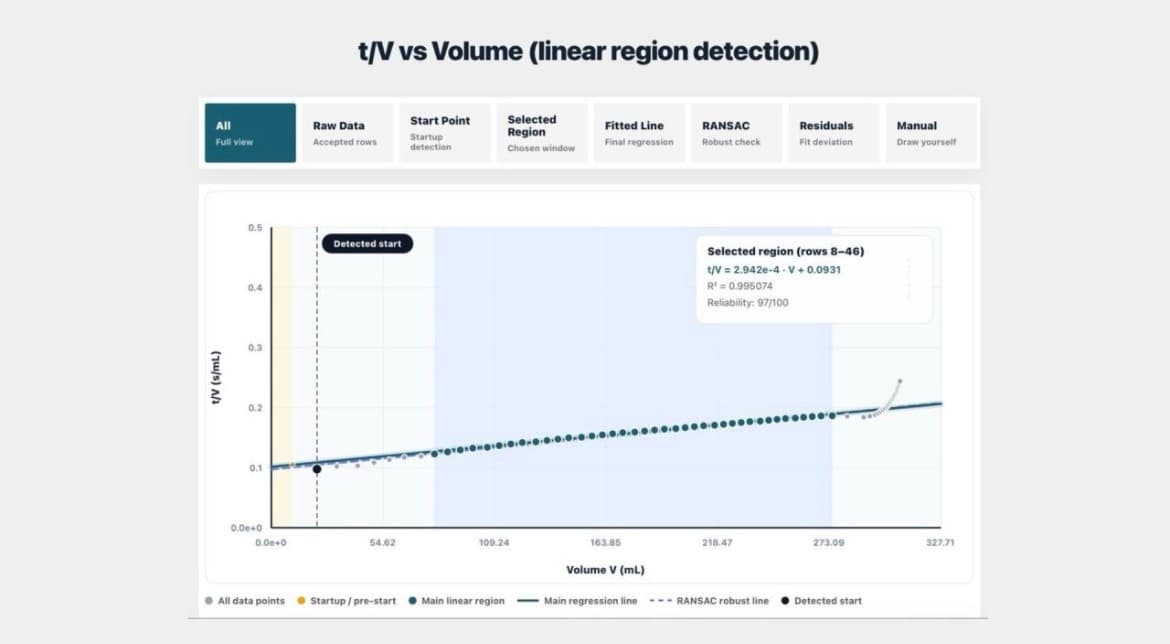
For this challenge, I wanted someone to be able to see which part of the curve had produced the result. Placing the selected interval and fitted line on the original curve would let them inspect the selection directly. Otherwise, I would be asking them to trust a choice the software had made while giving them very little basis for questioning it.