
Your Brain Deletes Sameness. So Does the Market.
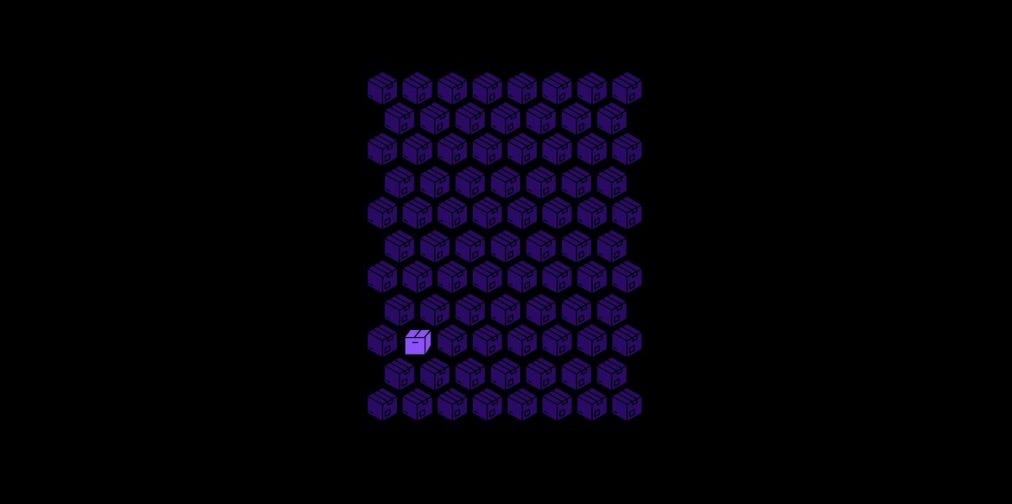
Your eyes are lying to you right now — anything in this room that hasn't changed in the last few seconds has already disappeared from your awareness. You're only seeing what's still moving, and still breaking some pattern.
That's just a fact about how brains decide what's worth paying attention to, and it's the actual mechanism — the neurological one — behind why some products get remembered and others, sometimes better ones, vanish into the same fog as that wall behind you.
The day I am writing this article is the day of launching procli V0.1. I took a break meaning to write about procli and answer the question "do I know what I'm building, and can anyone find it once it exists."
The first is a positioning question. The second is more about distribution. This article is about the first, because distribution needs positioning — without it, more people will simply be discovering something that doesn't yet have a reason to exist in their minds.
Positioning is the contrast you create in someone's mind. By contrast I mean the measurable difference between what lives in their head and what you're putting there. That contrast is literally the entire game. Positioning theory usually starts at messaging, which is a mistake, because messaging only works because of a mechanism running underneath it that has nothing to do with marketing at all.
Why sameness is invisible
Since our topic is about being visible in the market, let's talk a bit about the anatomy of eyes and how they work. Eyes are not built to detect light but to detect change in light. The retina — the layer of light-sensitive cells at the back of your eye — contains photoreceptors that fire when something shifts, and go quiet when nothing does.
Stare at a wall under a steady lamp for long enough, and the cells responsible for seeing that wall will actually stop responding to it, because nothing about it is different from a second ago. This is called sensory adaptation, and it is true for every sense you have, like hearing and touch. Your nervous system is built to notice onset, offset, and edges.
Constant, unchanging input gets filtered out before you're even consciously aware of it, because your brain's attention is a limited resource, and it spends that resource on what changed, not on what stayed the same.
That single fact has a direct consequence for anyone trying to get noticed as it shows that the question "how do I communicate value" is the wrong starting question. Value is only felt relative to whatever baseline is already sitting in someone's head, which means before you try to communicate anything, the question should be what you're currently being measured against, and whether you chose that comparison on purpose, or just let it default to whatever was already there.
Contrast gets remembered, not just noticed
In the previous section we explained why a difference gets noticed in the first place. But you actually need to get noticed + kept and remembered — and that's a separate mechanism that runs on memory.
The brain receives far more sensory information per second than it could ever store. Its first job is to encode this and discard that. The filter it uses is deviation from local pattern. If you show someone a list of similar items — a string of two-digit numbers, say — with one item that breaks the pattern, like a word dropped into the middle of the numbers, or a single number printed in red, that one item gets recalled at dramatically higher rates than its neighbors. The only reason for that is because it doesn't fit the existing category, and the brain has to do something with it other than file it away automatically.
This is the isolation effect, and the implication is uncomfortable if you've been optimizing for quality alone because your memorability is set by your environment, not by your quality. An excellent product surrounded by equally excellent, equally-shaped alternatives is statistically invisible, while a mediocre product that breaks the pattern of its category gets remembered by default, because the nervous system's filter evaluates deviation. (That said, I only talk about memorability here — beyond that, I believe in giving users the excellent value)
This is also why you should change how you think about competitors. The contrast that forced the encoding becomes the path back to the memory. Every time someone encounters the category default, the thing that broke from it gets pulled back into mind, automatically, without effort.
This is why "just be better" is such weak strategy advice for new product entry. Better, inside the same category shape, gets averaged into the same bucket as everything else that looks like it. Contrast is the precondition for quality being perceived as a separate thing at all.
Building the contrast
1. Name the existing belief.
Every category ships with a default assumption that's widely held and almost never spoken aloud, and that assumption functions as the floor the entire category — your competitors included — is standing on without ever examining it directly. You cannot build contrast against something you haven't named , because a vague target produces a vague position. Saying "we're different" commits you to nothing, while saying "different from this specific belief" gives you something concrete to push against.
In procli's market, that belief is that the system producing the code is qualified to be the primary evaluator of it.
When an AI agent generates a file, refactors a function, or wires up an integration, the implicit assumption is that if it runs and looks plausible, it's probably fine — the same tool that built it is trusted to know whether it should ship.
2. Find the tension point.
The existing belief always extracts a cost somewhere downstream, and that cost usually gets absorbed silently, as the person paying it has already filed it away as just how things are — or the price of working this way. You find the tension point by looking for whatever people have normalized that, underneath the normalization, still genuinely bothers them.
With AI-assisted development, the generation feels purely positive, fast, almost frictionless, which is exactly why the cost goes unnoticed until later. It shows up instead as a file count creeping upward with dead, half-finished pieces nobody remembers writing; as a low-grade, persistent unease about whether a key or token got left exposed somewhere in the rush; as a codebase that felt fast to build and turns out, six months on, to be slow, or too risky to hand off, sell, or extend. The concern then becomes that "I can build this quickly, but can I confidently see everything the agent is introducing or what the codebase is becoming?" That's the tension. Speed and structural soundness were never actually the same axis, even though the belief running underneath the entire category treats them as one.
3. Move to the actual opposite pole.
Weak positioning moves ten degrees off category center and calls the result differentiation, but a ten-degree shift shouldn’t be called a contrast — as real contrast requires moving to the genuine opposite end of the axis and staying there. That distance becomes the identity.
The ten-degree move for procli would have been to position it as a smarter AI that produces more secure code — which is the same category belief, just improved. That move runs into a structural problem too: the tools already occupying that space are deeply resourced, and "better AI output" is an arms race nobody outside a frontier lab can reliably win. The actual opposite pole is the system writing the code should not be the only system checking it. Procli now is an independent layer that sits outside the generation process, checking proposed agent actions before they're applied, scanning the repository for what the codebase has already become, and presenting findings in one place. That independence is the position.
4. Back it with a costly signal.
An opposite pole stated without proof is indistinguishable from every other brand's unverifiable claim, and the market has learned, to discount claims by default through repeated exposure to brands that said things and didn't mean them. What actually counts as proof to a skeptical reader is a decision that would have been objectively easier not to make, because cheap talk doesn't cost the speaker anything, which is exactly why it proves nothing. The signal has to cost something real before it's believable.
5. Name the shared enemy.
A position needs something to push against — a named competitor, an industry default, a widespread habit, or an assumption the audience has never heard named out loud. Naming the enemy does two things: it sharpens what you stand for by defining what you stand against, and it gives people who already feel that friction a place to belong, since identity organizes around shared opposition at least as strongly as it organizes around shared preference.
If you think procli's enemy is AI, or the developers using it, that's a mistake — framing either of those as the problem would alienate exactly the people the product is built for. The enemy is unchecked AI-made change like a modification entering a real product without an independent quality or security check. That framing is precise enough to mean something and honest enough not to insult the audience. It says software intended for real users deserves an independent check regardless of who — or what — wrote it.
6. Repeat the signal until it's predictable.
A position exists only through repetition along an unchanging axis — pricing, design, language, everything. An inconsistent decision won't kill a position outright, but it adds noise, and a blurred contrast functions identically to no contrast at all, since the same triage filter that made the red number memorable doesn't fire for things that almost broke the pattern. So, keep repeating your signal!