
Back to archiveLayan Faraj

What You Know and What You Think You Know

What You Know and What You Think You Know

You have probably finished a book, closed it, and felt smarter after it. Then three weeks later, someone asked you about it, and you realized you could not explain a single idea from it with any precision. That happened to me multiple times. Sure, I did read, but I didn’t attain the knowledge. That gap — between absorbing something and actually knowing it — almost no one realizes, because consuming information feels exactly like gaining knowledge. But it isn’t. What most people call knowledge is closer to vocabulary. They know the words. They can define them. They can also use them in sentences that sound correct. But when the situation gets complicated and the answer isn’t obvious, the words will stop working — because words were all there ever was.

We can say that information is raw material while knowledge is what happens after you’ve processed it, organized it, and understood its structure.

How Knowledge Actually Grows

There’s a useful distinction between two directions of learning: breadth and depth. (see Figure 1.1)

Breadth means expanding across many domains — learning enough about psychology, economics, biology, design, and history to move between them. That is valuable, actually, as people who learn broadly develop the ability to see structural similarities across fields and think more creatively because of it. But breadth has a ceiling. You can know a lot about many things and still not know any of them deeply enough to solve an actual problem in them. That’s what’s usually meant by “generalist,” and it’s not always meant as a compliment.

Depth means going far into a single domain — where the person becomes a “specialist.” And as for breadth, isolated depth has its own limitation, as you can become highly capable in one area while remaining blind to the patterns and tools that exist all around it.
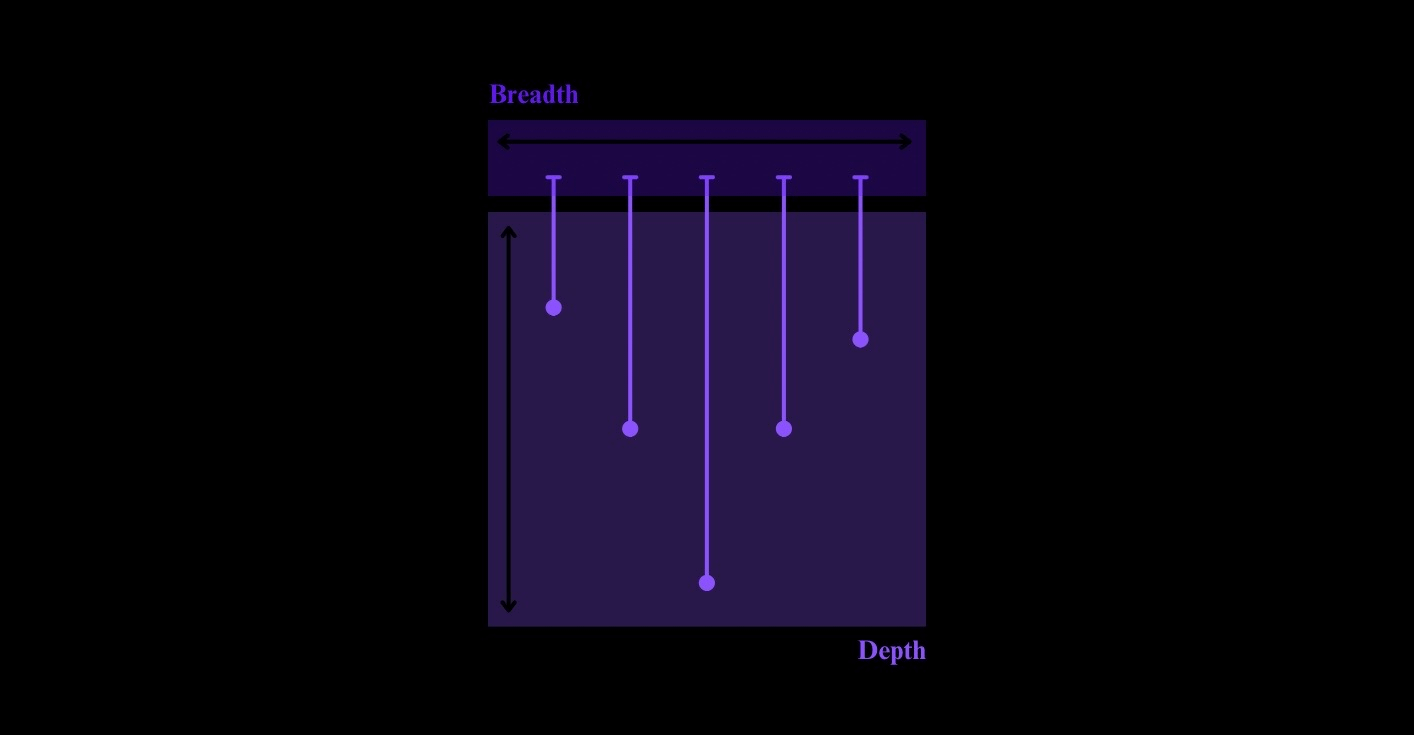
figure 1.1: Dimensions of Learning: Depth and Breadth

The answer is both. A surgeon needs depth in anatomy and mechanism, breadth enough to speak to a patient’s psychology and communicate risk to a family. A product designer needs depth in how people make decisions, breadth across engineering constraints, business models, and visual language. The question is never which of depth or breadth is better. It is more about how much depth you actually need in each domain you touch — and being honest enough with yourself to answer that accurately.

Which leads to the structure of depth itself. “Knowing something deeply” has a specific architecture. (see Figure 1.2)
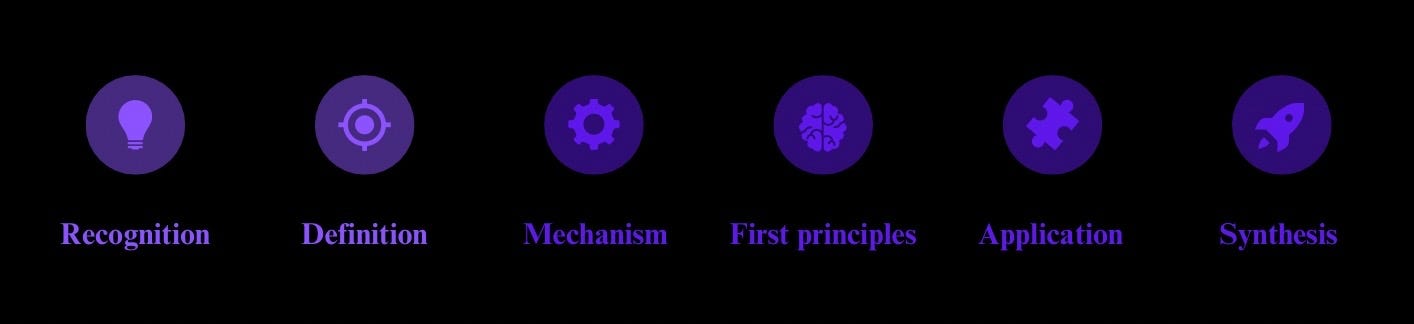
Figure 1.2: Architecture of Depth in Learning

The Six Levels

Level one: Recognition. Repeated exposure to a domain makes its vocabulary familiar. You can identify when a conversation is about a topic, even if you couldn’t participate meaningfully in it.

Level two: Definition. You can explain what terms mean. If someone asks what specific cake resistance is — a concept from filtration engineering — you can tell them it measures the resistance to liquid flow through an accumulating filter cake. This feels like understanding, but actually isn’t. Because it is just a description of the concept at rest. More like holding a label, not the thing itself.

Level three: Mechanism. You understand how it behaves. So now you can say that specific cake resistance increases as solids accumulate, varies with particle size and shape, and determines how quickly a filtration cycle loses efficiency. At this level you can follow causality: when X happens, Y follows, because of Z.

Level four: First principles. You understand why the mechanism works the way it does. Why does cake resistance grow? Because each new layer of deposited solids adds another barrier to flow — increasing the path length and friction for the liquid trying to pass through. At this level you can reason about situations you’ve never encountered before, because you’re now reasoning from causes.

Level five: Application. You can use the knowledge under real conditions — for example, incomplete data, time pressure, conflicting constraints, ambiguous inputs. This level is important because real situations don’t present themselves as clean examples. They’re messy, partial, and contradictory.

Level six: Synthesis. You begin seeing the same structures appear across entirely different domains. The way cake resistance compounds across filtration stages follows the same logic as technical debt compounding in a software codebase for example — resistance accumulates, the system slows, and by the time it’s obvious something is wrong, the cost of fixing it has multiplied. At this level, knowledge from one domain accelerates understanding in another, because you’re transferring a structure of information rather than a fact. However, synthesis can’t be forced, but you can learn to notice when it’s happening and follow it.

Apparently, most people stop at level two and feel satisfied, because being able to define something feels like understanding. The problem is that definition doesn’t help you know when to use it, how it works, how it connects to other ideas, or how to apply it in real situations. So I like to say that level three is sufficient for everything you want as general knowledge, or to hold an informed conversation without being deceived by surface-level explanations.

Level four becomes essential when you’re making decisions in a domain — as an investor for example. Because it lets you assess claims you’ve never encountered before, and you can trace them back to causes you already understand.

Level five is the minimum for creating anything that has to work in the real world. Not saying four isn’t valuable, but as said earlier real situations don’t arrive in clean conditions.

Knowledge and Ideation

I listen to podcasts a lot. For most topics, I go to level three mechanism, which is enough to help me think clearly about something without pretending to be a practitioner. But sometimes a topic pulls you further.

That’s what happened to me with the concept of mental images. I came across it in a podcast, found it genuinely compelling, went through a short course on it, and filed it away. Some time later, I was asked to propose a solution for a learning platform. And I reached for that concept to frame the entire problem.

This part is worth understanding about ideation: some ideas come from having knowledge in an unexpected domain at the right depth, that when a problem appears in a different field, the structure you hold fits it perfectly.

So breadth will create the surface area for you and depth will create the precision. And the idea emerges at that intersection.

The Foundation: Mental Images

I really liked the idea of mental images, so it is worth writing about here before I continue about Ideation.

Mental images starts with the fact that every judgement you make rests on a concept. And every concept you hold exists in your mind as a mental image — a specific shape, with specific edges, formed by everything you’ve encountered up to this moment. This is an idea adopted from a classical framework in Islamic logic.

In Islamic logic (mantiq), knowledge is divided into two branches. The first is ’Ilm al-Tasawwurāt — the science of concept formation. A tasawwur is the raw mental image that forms when you encounter a word or idea. Read the word “mountain” right now — whatever appeared in your mind is a tasawwur. It has a shape, a texture, a set of associations.

The second branch is ’Ilm al-Tasdīqāt — the science of judgement. If tasawwur is the shape a concept takes in your mind, tasdīq is what happens when you hold two concepts together and affirm a relationship between them. “The mountain is high” is a claim that can be true or false.

The dependency between them is that you cannot judge correctly what you have not first conceived correctly. A blurred concept produces a false judgement that feels true, because from the inside you cannot tell the difference.

Those images aren’t chosen but formed — by parents, education, culture, experience, every input that has revised or reinforced what a word means to you. Which is why the same word can carry a genuinely different meaning to two people who would both insist they know exactly what it means.

That’s the raw knowledge I used in order to ideate for the learning platform. Yet ideation can never happen correctly if someone didn’t identify a problem, or could not understand the details of it — I would like to briefly define learning platforms and their problem so the idea becomes clearer.

Online learning platforms are places where instructors package their expertise into video courses, and learners access them on demand. The catalogue covers thousands of topics: programming, design, business, language, and more. The model works as a loop. More instructors means more courses, more courses attract more learners, more learner demand pulls more instructors in, and the platform takes a commission on every sale.

Yet two things can break it: refunds and low ratings. When a learner refunds a course, the platform loses revenue — but that’s honestly the least of it. The more damaging part is that a refund signals that something in the experience didn’t work. One refund means nothing, but when that starts happening at scale, across thousands of learners and hundreds of courses, it tells us that learners are leaving dissatisfied. Dissatisfied learners don’t come back, they don’t recommend the platform, and sometimes they go to warn others.

Low ratings work the same way, except they do it publicly. A course sitting at three stars sells less, and sits there on the page as a visible signal to every new learner considering it that this might not be worth their time or money. When enough courses carry that signal, it stops being about individual courses and starts being about the platform itself. As new learners will hesitate before signing up. And instructors, who chose this platform precisely because of the audience it promised them, start questioning whether it’s still the right place to build.

What Happens Below the Surface Before Someone Asks for a Refund

An instructor is a specialist. And we can define “teaching” as the work of moving someone else through the levels of knowledge in a domain — building definitions first, then mechanism, then first principles. The entire structure depends on the first two levels being correctly established in the learner’s mind. If they aren’t, everything built on top gets assembled on a false foundation — and the learner has no way of knowing it, simply because a false foundation feels exactly like a good one.

I can imagine it this way — in fact, it has happened to me multiple times as a student and someone who explains. An instructor is teaching a course on innovation. By “innovation,” he means a structured process of identifying real problems and developing solutions that create value. That’s his mental image, built from years in the field. And the learner’s mental image of “innovation” is, let’s say a flying car.

The instructor teaches his process. The learner waits for the flying car. Two videos in, the content feels disconnected. By the tenth video, the learner leaves a one-star review with the comment “bad quality content” — and requests a refund. And I believe it is neither party’s fault. It is simply the fact that the mental images never met, and neither of them knew it was happening.

You might be wondering that almost all instructors do define terms related to their specific field, but what if the word has a high impact on the field yet is classified as a normal daily word? For example, “risk,” “problem,” and “danger” don’t carry the same meaning — especially in IT.

The Global Scale of the Problem

This problem gets worse on online platforms specifically, because these platforms are global.

The learner enrolling today might be coming from a completely different country, culture, and education system than the instructor who built the course. Every single one of them arrives with mental images of every domain-critical word in that course — images formed long before they clicked enroll.

Nobody thinks their mental image is wrong. That’s what makes it more difficult to catch. The illusion of understanding feels exactly like actual understanding.

At scale, this pattern shows up as refunds, low ratings, and learners who leave dissatisfied and don’t return. The platform reads it as a content quality problem and pushes instructors to improve. But you cannot fix a conceptual misalignment problem with better production values.

A Feature That Addresses the Root

The proposal is a feature built directly into the video player. (see Figure 1.3)

When an instructor uses a word that carries enough conceptual weight to derail understanding if it lands incorrectly, an optional indicator appears on screen as a signal that this word might be worth aligning before continuing.

The learner can ignore it. If they want it, they tap it, the video pauses, and five things appear:

A simple definition — something precise for the mind to anchor to before anything else gets built on top of it. This is level two.

The core idea — the concept stripped down to what it is about, without surrounding context that could distort it. This is level three: the behavior.

What it is not — because half of understanding something is knowing where its edges are, and what it is most commonly confused with. This is first-principle reasoning, where you understand the boundary.

An example and a non-example side by side — because the contrast between them communicates the boundary more precisely than any description can.

And a practical use — what the concept actually looks like when applied correctly in a real situation, which is the first gesture toward level five.

The structure walks the learner from definition through mechanism to the edge of application — in around ninety seconds, before the video resumes. The instructor and the learner are now working from the same image. Everything built after that has a strong foundation.

Figure 1.3: A Proposed Feature for Learning Platforms

“To be said, the right mental image doesn’t guarantee you’ll think well, however, the wrong one almost guarantees you won’t and you’ll have no idea that’s what happened.” —Layan Faraj

Read on Substack
Layan Faraj1

What You Know and What You Think You Know

You have probably finished a book, closed it, and felt smarter after it. Then three weeks later, someone asked you about it, and you realized you could not explain a single idea from it with any precision. That happened to me multiple times. Sure, I did read, but I didn’t attain the knowledge. That gap — between absorbing something and actually knowing it — almost no one realizes, because consuming information feels exactly like gaining knowledge. But it isn’t. What most people call knowledge is closer to vocabulary. They know the words. They can define them. They can also use them in sentences that sound correct. But when the situation gets complicated and the answer isn’t obvious, the words will stop working — because words were all there ever was.

We can say that information is raw material while knowledge is what happens after you’ve processed it, organized it, and understood its structure.

How Knowledge Actually Grows

There’s a useful distinction between two directions of learning: breadth and depth. (see Figure 1.1)

Breadth means expanding across many domains — learning enough about psychology, economics, biology, design, and history to move between them. That is valuable, actually, as people who learn broadly develop the ability to see structural similarities across fields and think more creatively because of it. But breadth has a ceiling. You can know a lot about many things and still not know any of them deeply enough to solve an actual problem in them. That’s what’s usually meant by “generalist,” and it’s not always meant as a compliment.

Depth means going far into a single domain — where the person becomes a “specialist.” And as for breadth, isolated depth has its own limitation, as you can become highly capable in one area while remaining blind to the patterns and tools that exist all around it.

figure 1.1: Dimensions of Learning: Depth and Breadth

The answer is both. A surgeon needs depth in anatomy and mechanism, breadth enough to speak to a patient’s psychology and communicate risk to a family. A product designer needs depth in how people make decisions, breadth across engineering constraints, business models, and visual language. The question is never which of depth or breadth is better. It is more about how much depth you actually need in each domain you touch — and being honest enough with yourself to answer that accurately.

Which leads to the structure of depth itself. “Knowing something deeply” has a specific architecture. (see Figure 1.2)

Figure 1.2: Architecture of Depth in Learning

The Six Levels

Level one: Recognition. Repeated exposure to a domain makes its vocabulary familiar. You can identify when a conversation is about a topic, even if you couldn’t participate meaningfully in it.

Level two: Definition. You can explain what terms mean. If someone asks what specific cake resistance is — a concept from filtration engineering — you can tell them it measures the resistance to liquid flow through an accumulating filter cake. This feels like understanding, but actually isn’t. Because it is just a description of the concept at rest. More like holding a label, not the thing itself.

Level three: Mechanism. You understand how it behaves. So now you can say that specific cake resistance increases as solids accumulate, varies with particle size and shape, and determines how quickly a filtration cycle loses efficiency. At this level you can follow causality: when X happens, Y follows, because of Z.

Level four: First principles. You understand why the mechanism works the way it does. Why does cake resistance grow? Because each new layer of deposited solids adds another barrier to flow — increasing the path length and friction for the liquid trying to pass through. At this level you can reason about situations you’ve never encountered before, because you’re now reasoning from causes.

Level five: Application. You can use the knowledge under real conditions — for example, incomplete data, time pressure, conflicting constraints, ambiguous inputs. This level is important because real situations don’t present themselves as clean examples. They’re messy, partial, and contradictory.

Level six: Synthesis. You begin seeing the same structures appear across entirely different domains. The way cake resistance compounds across filtration stages follows the same logic as technical debt compounding in a software codebase for example — resistance accumulates, the system slows, and by the time it’s obvious something is wrong, the cost of fixing it has multiplied. At this level, knowledge from one domain accelerates understanding in another, because you’re transferring a structure of information rather than a fact. However, synthesis can’t be forced, but you can learn to notice when it’s happening and follow it.

Apparently, most people stop at level two and feel satisfied, because being able to define something feels like understanding. The problem is that definition doesn’t help you know when to use it, how it works, how it connects to other ideas, or how to apply it in real situations. So I like to say that level three is sufficient for everything you want as general knowledge, or to hold an informed conversation without being deceived by surface-level explanations.

Level four becomes essential when you’re making decisions in a domain — as an investor for example. Because it lets you assess claims you’ve never encountered before, and you can trace them back to causes you already understand.

Level five is the minimum for creating anything that has to work in the real world. Not saying four isn’t valuable, but as said earlier real situations don’t arrive in clean conditions.

Knowledge and Ideation

I listen to podcasts a lot. For most topics, I go to level three mechanism, which is enough to help me think clearly about something without pretending to be a practitioner. But sometimes a topic pulls you further.

That’s what happened to me with the concept of mental images. I came across it in a podcast, found it genuinely compelling, went through a short course on it, and filed it away. Some time later, I was asked to propose a solution for a learning platform. And I reached for that concept to frame the entire problem.

This part is worth understanding about ideation: some ideas come from having knowledge in an unexpected domain at the right depth, that when a problem appears in a different field, the structure you hold fits it perfectly.

So breadth will create the surface area for you and depth will create the precision. And the idea emerges at that intersection.

The Foundation: Mental Images

I really liked the idea of mental images, so it is worth writing about here before I continue about Ideation.

Mental images starts with the fact that every judgement you make rests on a concept. And every concept you hold exists in your mind as a mental image — a specific shape, with specific edges, formed by everything you’ve encountered up to this moment. This is an idea adopted from a classical framework in Islamic logic.

In Islamic logic (mantiq), knowledge is divided into two branches. The first is ’Ilm al-Tasawwurāt — the science of concept formation. A tasawwur is the raw mental image that forms when you encounter a word or idea. Read the word “mountain” right now — whatever appeared in your mind is a tasawwur. It has a shape, a texture, a set of associations.

The second branch is ’Ilm al-Tasdīqāt — the science of judgement. If tasawwur is the shape a concept takes in your mind, tasdīq is what happens when you hold two concepts together and affirm a relationship between them. “The mountain is high” is a claim that can be true or false.

The dependency between them is that you cannot judge correctly what you have not first conceived correctly. A blurred concept produces a false judgement that feels true, because from the inside you cannot tell the difference.

Those images aren’t chosen but formed — by parents, education, culture, experience, every input that has revised or reinforced what a word means to you. Which is why the same word can carry a genuinely different meaning to two people who would both insist they know exactly what it means.

That’s the raw knowledge I used in order to ideate for the learning platform. Yet ideation can never happen correctly if someone didn’t identify a problem, or could not understand the details of it — I would like to briefly define learning platforms and their problem so the idea becomes clearer.

Online learning platforms are places where instructors package their expertise into video courses, and learners access them on demand. The catalogue covers thousands of topics: programming, design, business, language, and more. The model works as a loop. More instructors means more courses, more courses attract more learners, more learner demand pulls more instructors in, and the platform takes a commission on every sale.

Yet two things can break it: refunds and low ratings. When a learner refunds a course, the platform loses revenue — but that’s honestly the least of it. The more damaging part is that a refund signals that something in the experience didn’t work. One refund means nothing, but when that starts happening at scale, across thousands of learners and hundreds of courses, it tells us that learners are leaving dissatisfied. Dissatisfied learners don’t come back, they don’t recommend the platform, and sometimes they go to warn others.

Low ratings work the same way, except they do it publicly. A course sitting at three stars sells less, and sits there on the page as a visible signal to every new learner considering it that this might not be worth their time or money. When enough courses carry that signal, it stops being about individual courses and starts being about the platform itself. As new learners will hesitate before signing up. And instructors, who chose this platform precisely because of the audience it promised them, start questioning whether it’s still the right place to build.

What Happens Below the Surface Before Someone Asks for a Refund

An instructor is a specialist. And we can define “teaching” as the work of moving someone else through the levels of knowledge in a domain — building definitions first, then mechanism, then first principles. The entire structure depends on the first two levels being correctly established in the learner’s mind. If they aren’t, everything built on top gets assembled on a false foundation — and the learner has no way of knowing it, simply because a false foundation feels exactly like a good one.

I can imagine it this way — in fact, it has happened to me multiple times as a student and someone who explains. An instructor is teaching a course on innovation. By “innovation,” he means a structured process of identifying real problems and developing solutions that create value. That’s his mental image, built from years in the field. And the learner’s mental image of “innovation” is, let’s say a flying car.

The instructor teaches his process. The learner waits for the flying car. Two videos in, the content feels disconnected. By the tenth video, the learner leaves a one-star review with the comment “bad quality content” — and requests a refund. And I believe it is neither party’s fault. It is simply the fact that the mental images never met, and neither of them knew it was happening.

You might be wondering that almost all instructors do define terms related to their specific field, but what if the word has a high impact on the field yet is classified as a normal daily word? For example, “risk,” “problem,” and “danger” don’t carry the same meaning — especially in IT.

The Global Scale of the Problem

This problem gets worse on online platforms specifically, because these platforms are global.

The learner enrolling today might be coming from a completely different country, culture, and education system than the instructor who built the course. Every single one of them arrives with mental images of every domain-critical word in that course — images formed long before they clicked enroll.

Nobody thinks their mental image is wrong. That’s what makes it more difficult to catch. The illusion of understanding feels exactly like actual understanding.

At scale, this pattern shows up as refunds, low ratings, and learners who leave dissatisfied and don’t return. The platform reads it as a content quality problem and pushes instructors to improve. But you cannot fix a conceptual misalignment problem with better production values.

A Feature That Addresses the Root

The proposal is a feature built directly into the video player. (see Figure 1.3)

When an instructor uses a word that carries enough conceptual weight to derail understanding if it lands incorrectly, an optional indicator appears on screen as a signal that this word might be worth aligning before continuing.

The learner can ignore it. If they want it, they tap it, the video pauses, and five things appear:

A simple definition — something precise for the mind to anchor to before anything else gets built on top of it. This is level two.

The core idea — the concept stripped down to what it is about, without surrounding context that could distort it. This is level three: the behavior.

What it is not — because half of understanding something is knowing where its edges are, and what it is most commonly confused with. This is first-principle reasoning, where you understand the boundary.

An example and a non-example side by side — because the contrast between them communicates the boundary more precisely than any description can.

And a practical use — what the concept actually looks like when applied correctly in a real situation, which is the first gesture toward level five.

The structure walks the learner from definition through mechanism to the edge of application — in around ninety seconds, before the video resumes. The instructor and the learner are now working from the same image. Everything built after that has a strong foundation.

Figure 1.3: A Proposed Feature for Learning Platforms

“To be said, the right mental image doesn’t guarantee you’ll think well, however, the wrong one almost guarantees you won’t and you’ll have no idea that’s what happened.” —Layan Faraj

Read on Substack
Layan Faraj1

Page 1 of 1

Page 1 of 1: Page 1