
The Cost of an Open Door
"It is not the mountain we conquer, but ourselves." — often attributed to Edmund Hillary
Hillary said the line above about a physical mountain, however, underneath it sits a distinction that the mountain and the self are two entirely different opponents, and whichever one you happen to be fighting decides how hard the fight is, and what losing will mean about you afterward.
The Lens
As simple as I can put it is that a low barrier to entry does not remove fear so much as relocate where that fear points. So when something is hard to reach, failing to reach it can always be explained by the difficulty itself, because the obstacle absorbs the blame and the self will be untouched, filed under circumstance rather than character. When that same thing becomes easy to reach — as what we have now where the tool is free, the tutorial is a search away, the only thing left between you and the attempt is you — the obstacle can no longer absorb anything on your behalf, so any failure to act, or any failure to succeed once you have acted, has nowhere left to land except on you. This is the reason the easiest opportunities to access are so often the ones people avoid the longest, circle without touching, or start and abandon before the results can be judged because it has stopped offering an alibi, and an alibi, it turns out, was doing a lot of emotional work.
The Mechanism, in Three Layers
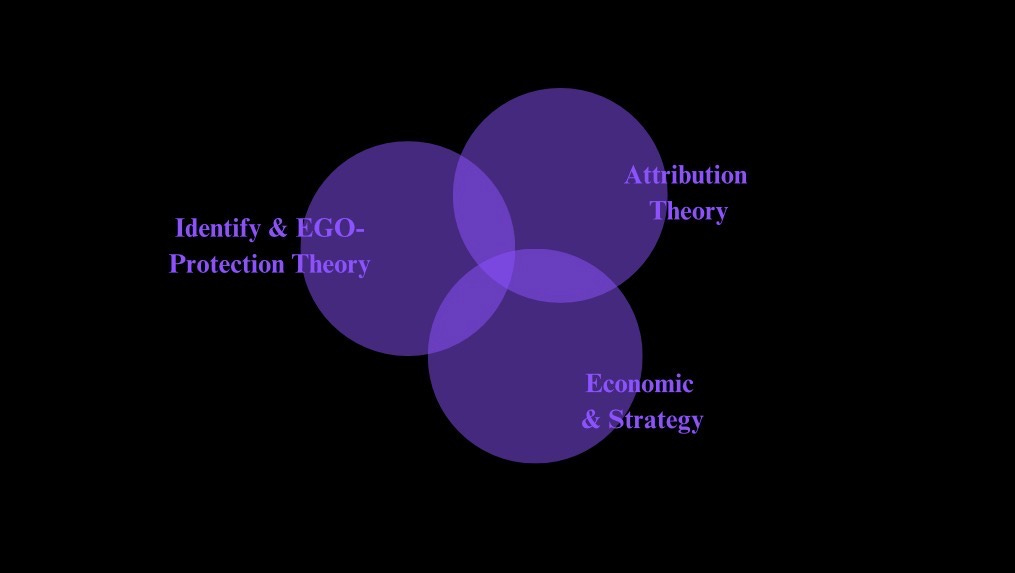
This lens is so much as three separate fields of expertise overlapping at one point.
So the first layer comes from economics and strategy, where "barrier to entry" is a term describing how much friction stands between an outsider and a field — things like money required, credentials needed, access withheld, specialized knowledge unavailable — and on its own this concept says nothing about emotion, since it is built only to measure friction (not feeling).
The second layer comes from attribution theory, the branch of psychology concerned with how people explain the causes of their own outcomes, which has shown that people sort those causes almost automatically into two bins, external causes like circumstance or luck, and internal causes like ability or character, and on its own this theory says nothing about barriers specifically, since it only describes where blame tends to travel once an outcome exists to be explained.
The third layer comes from identity and ego-protection psychology, which studies why people instinctively avoid situations capable of producing hard evidence against a preferred image of themselves, since holding onto "I would be good at this if I tried" is far more comfortable than holding the tested, falsifiable version of that same belief, and on its own this says nothing about access or explanation, since it only explains why certain evidence feels dangerous to go looking for.
The insight, however, appears in the overlap of the three: lower the friction described by the first layer, and the external explanation described by the second layer disappears along with it, which forces any subsequent failure into the one category the third layer says is genuinely threatening to defend against, so the barrier drops and the risk that was once circumstantial converts into a risk about identity which is a heavier kind of risk entirely.
I noticed this pattern when I was working on procli in early stages, there was a stretch where every remaining task was one I technically knew how to do and I moved slower through that stretch than I had earlier, when far more of the work was genuinely unfamiliar to me. That felt backward for a while, until I recognized that earlier, an unfinished spec had been doing the explaining for me, and later, with nothing left unfinished, any mediocre result would have been mine alone to answer for.
The Point to Carry Forward
Every time an easy opportunity is untouched, you cannot just ask "why doesn't this person just do it, it's right there," because that question assumes the barrier is still the obstacle when it almost certainly is not. The better question is what this person would actually have to find out about themselves if they tried and it didn't go well — and asking it, even without a fully satisfying answer, tends to be enough to get things moving again.